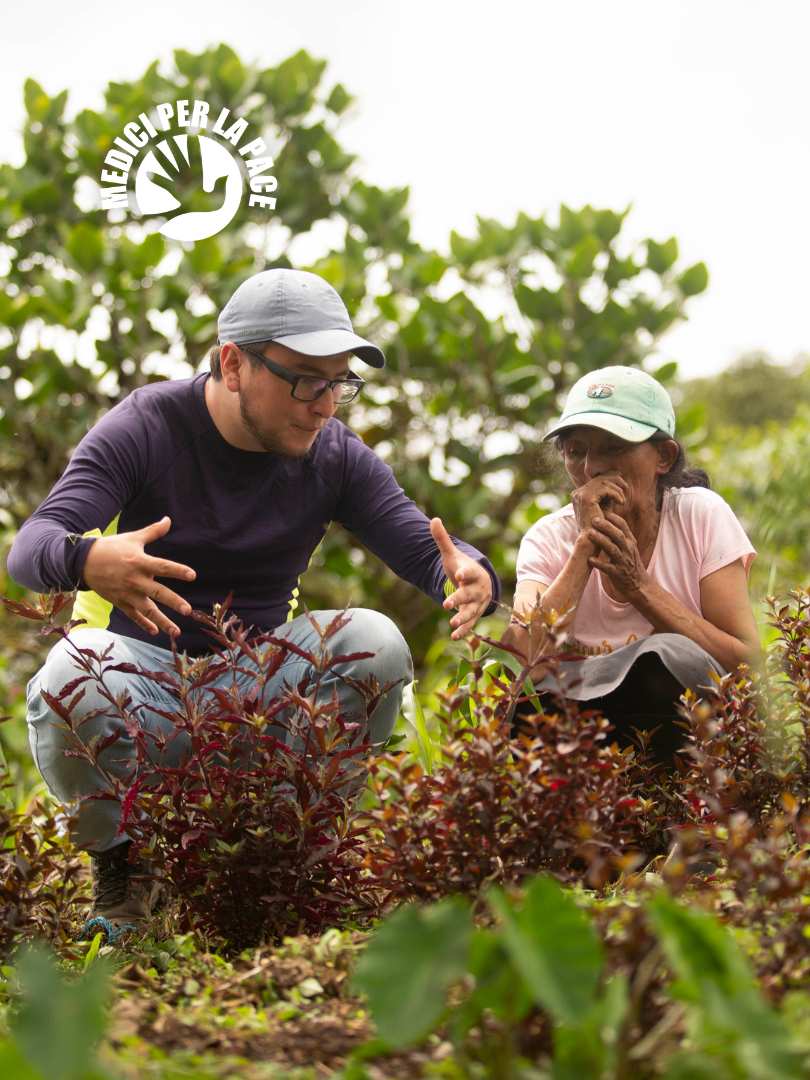
ECUADOR – Strengthening of food security for indigenous women farmers in the Ecuadorian Amazon to be carried out in three communities of Macas, in the province of Morona – Santiago
The project, carried out in collaboration with the local partner Fundación Atasim, ONGD (Organización No Gubernamental para el Desarrollo, Non-Governmental Organization for
Development), is geared towards helping to strengthen the food security of indigenous families in the Ecuadorian Amazon by encouraging the implementation of strategies that promote diversified and sustainable production for self-consumption and marketing.
The initiative focuses on the role of women as protagonists of the socio-economic development of communities, promoting local entrepreneurship according to agro-ecological principles and contributing, at the same time, to the protection of the heritage of knowledge, practices and values of indigenous culture.
The context
The intervention area is located in the indigenous communities of the Ecuadorian Amazon, in three communities in the canton of Morona-Santiago: Zuñac, San Isidro and 9 de Octubre. In the communities covered by the intervention, the percentage of families in poverty reaches dramatic levels: in the community of Zuñac, for example, 100% of households are in poverty. According to official data from the National Institute of Statistics and Census (INEC), in 2020 the poverty rate in the province of Morona Santiago was 60.7%, highlighting structural criticalities in the social and economic development of the territory. The situation is even more serious in the Canton of Morona, where the poverty indicator reaches 65.8%, exceeding the national average (61.3%) and placing itself among the highest values in Ecuador.
Poor disposable income limits access to food, reducing diet variety and causing severe nutritional imbalances.
Women play a fundamental role in food security and agro-production, promoting self-sufficiency with their daily work, strengthening cultural expressions, contributing to the protection and conservation of native seeds and strengthening marketing from producer to consumer. However, they have very limited access to productive resources such as water, land or credit.
There is a strong gender inequality, aggravated by poor educational opportunities, limited income control, difficulty in accessing the market and widespread gender-based violence. Indigenous women in the province of Morona-Santiago therefore experience a condition of triple discrimination, linked to gender, poverty and ethnicity.
The direct beneficiaries of the intervention are selected from within families in vulnerable conditions, following a general criterion of level of involvement in community life and interest in participating in concrete initiatives, as well as the socio-economic condition of the family.
Activities
The activities, integrated with each other, make it possible to:
- To ensure safe, quality and diversified nutrition for indigenous women farmers and families in target communities through the creation of family gardens and theoretical-practical training.
- Promote the sustainability of agricultural production for self-consumption and marketing by using climate-resilient crops and using bioinputs.
- Develop alternative agricultural production with good marketing potential.
- Promote the marketing of high value-added products in order to provide a stable source of income for women farmers and their families.
- To stimulate the search for alternative food sources through the study of the traditional customs of the target communities, in collaboration with the Natural History Museum of Verona.