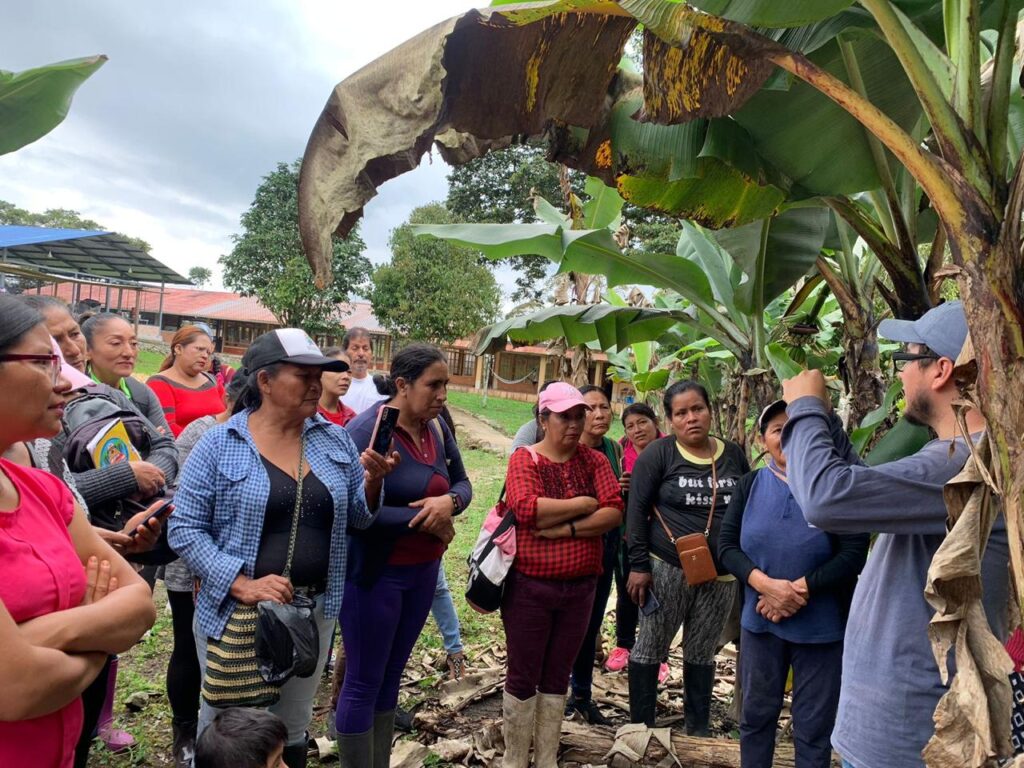
Doctors for Peace, in collaboration with the Museum of Natural History of the Municipality of Verona, has recently launched a development cooperation project aimed at protecting the health and food security of the indigenous peoples of the Ecuadorian Amazon. An Italian delegation will soon carry out a first exploratory mission on site to start a research project on the traditional diet of the Shuar and Achuar communities. Of significant importance among traditional food practices is entomophagy, or the use of insects for nutritional purposes.
“We are very pleased that the Municipality of Verona and the Civic Museums, in particular the Museum of Natural History, can contribute to this project of Doctors for Peace, which studies the conditions of nutrition, life and relationship with the environment of indigenous peoples in the Amazon in Ecuador – specifies the Councilor for Culture Marta Ugolini -. An expedition will soon leave which will also include a delegation from the Museum of Natural History, which once again confirms its role as a generator of knowledge useful for the well-being of populations, near and far in the world”.
Doctors for Peace, a volunteer organization founded in Verona in 2002 to protect the universal right to health in Italy and around the world, is the leader of the international cooperation project “Mujer Campesina – Strengthening the food security of indigenous peasant women of the Ecuadorian Amazon in three communities of Macas, in the province of Morona-Santiago, Ecuador”. “Among the objectives of the project – explains the president of Doctors for Peace Fabrizio Brescia – there are women’s empowerment, training in sustainable agriculture and resilient to climate change and the recovery and enhancement of the traditional knowledge of indigenous communities, which have always lived in a condition of strong social and economic marginalization”.
To enhance in particular the significant ancestral knowledge of these populations, a Memorandum of Understanding has been signed between Doctors for Peace and the Museum of Natural History of Verona. “The goal is to develop a research study on the food use of plants, insects and other invertebrates endemic to the Amazon by the indigenous Shuar and Achuar communities,” explains the Head of the Naturalistic Collections Office of the Museum of Natural History Leonardo Latella.
In Ecuador, the Escuela Superior Politécnica of the University of Chimborazo (ESPOCH) and a local organization, Fundación Atasim, are also participating in the study.
In the coming weeks, a delegation made up of representatives of Doctors for Peace and the Museum of Natural History will carry out a first mission in Ipiak, province of Morona Santiago, to make contact with the Achuar communities living in the Amazon jungle on the border between Ecuador and Peru.
The researchers will lay the foundations for a study on the species of insects and plants traditionally consumed by the population, their nutritional intake, the ecological role they play in local ecosystems and traditional preparation techniques.
This first exploratory mission will be followed by others which, over the next two years, will allow the research group to deepen its knowledge of the communities and their ancestral knowledge, and to identify, collect and study specimens representative of the diversity of endemic insects and plants used for food use. The ultimate aim of the research is in fact to contribute to the development and strengthening of sustainable food models, in balance with the increasingly fragile biodiversity of the Amazon territory.
The project, in addition to shedding light on still little-known aspects of indigenous culture, also represents an important opportunity for international collaboration between institutions and organizations, and will allow the sharing and exchange of knowledge and experiences between Ecuador and Italy.
Doctors for Peace is an organization founded on the initiative of a group of doctors and nurses with the aim of helping to guarantee the right to health to the most disadvantaged people in Italy and around the world. For over twenty years it has been developing and implementing cooperation projects in Eastern Europe, Asia, South America and Africa, collaborating with local institutions and partners. In Verona, the organization offers support to people in conditions of economic disadvantage and marginalization, with particular attention to the areas of social and health care for the most vulnerable people, social dentistry and health prevention and education.