Photo: PRABIN RANABHAT/Getty Images
Update of September 14, 2026 at 10:00
Almost three weeks after the devastating floods that hit northern Nepal, the country continues to face one of the worst natural disasters in its recent history. Rescue and search operations continue amid enormous difficulties, while thousands of families have lost their homes, livelihoods and access to essential services.
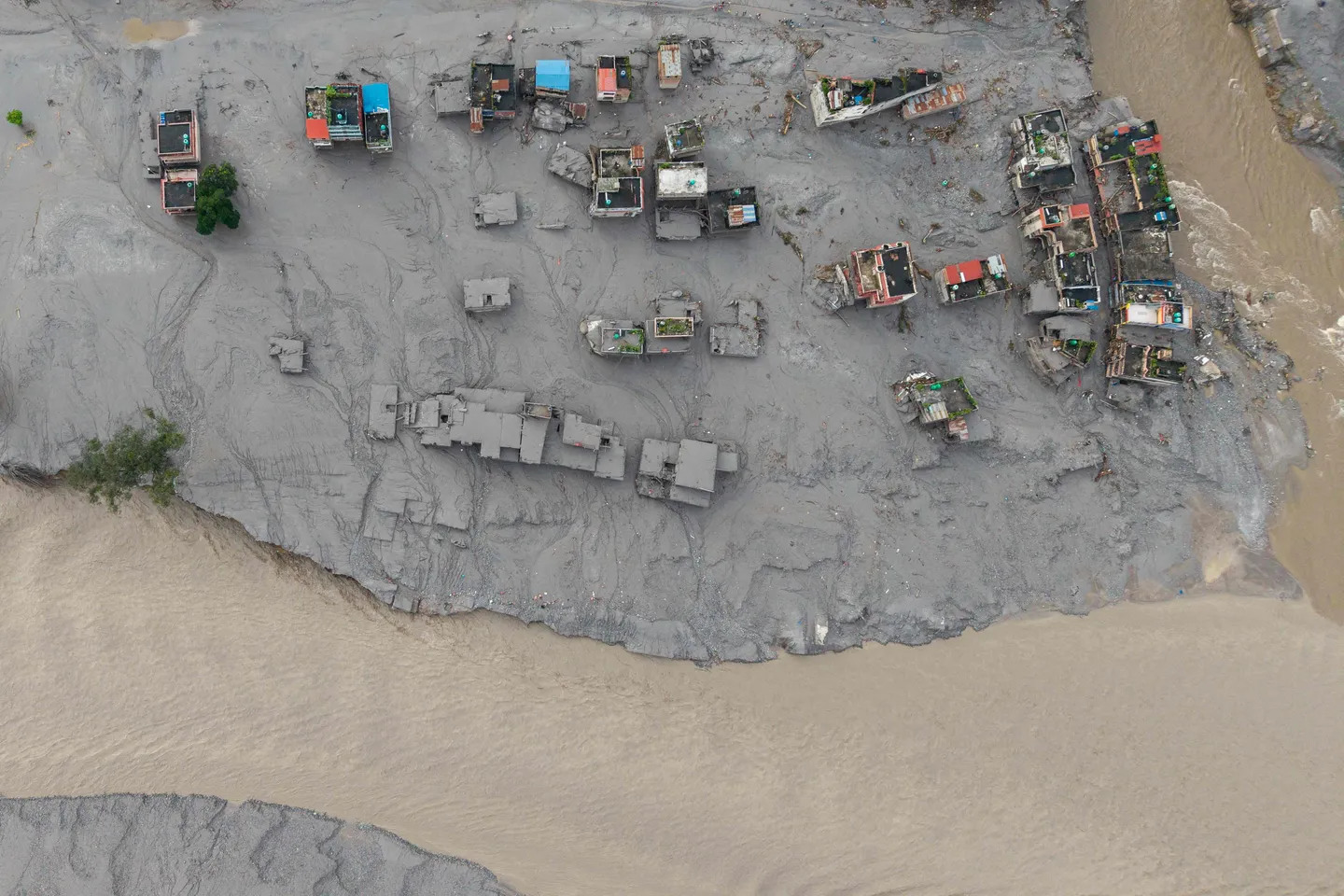
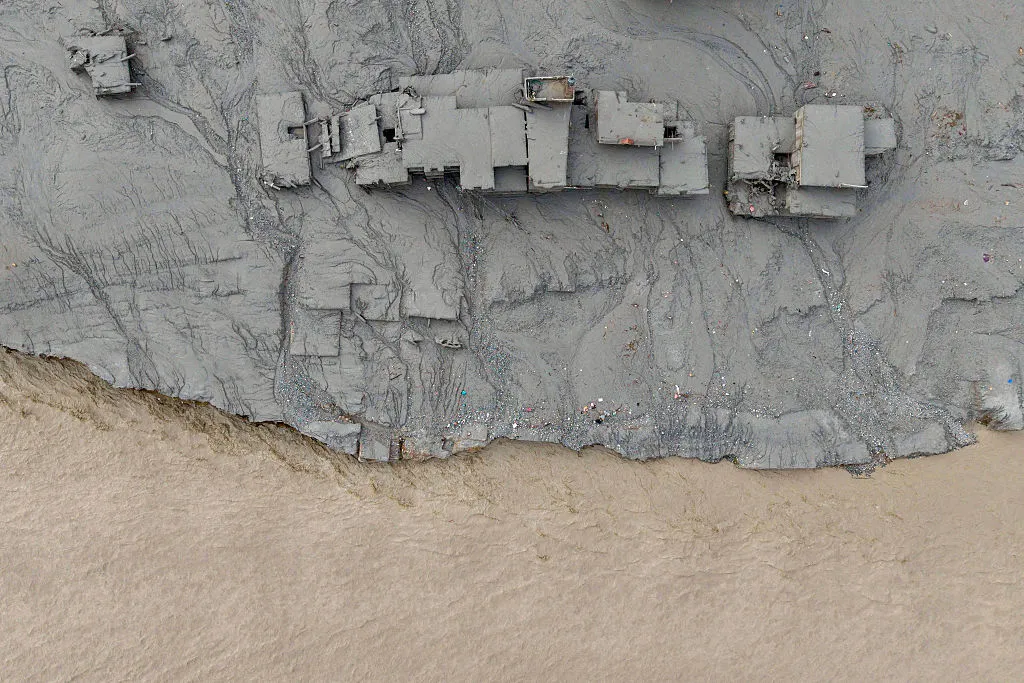
The tragedy originated on August 26, 2026, when the collapse of a glacier in the Himalayan area on the border between Nepal and Tibet caused a gigantic wave of water, mud and debris. The floods devastated valleys, villages and infrastructure, also overwhelming several hydroelectric plants and disrupting important road connections.
A direct testimony from our partners gives back the human dimension of the tragedy. Although the conditions of the roads to Rasuwa have improved thanks to the decrease in rainfall, the population continues to experience the most painful consequences of the disaster, including displacement, loss of homes and mourning for loved ones.
The road to Rasuwa has improved compared to last time. It has rained less in recent days and the route is no longer muddy as before. (…) From the point of view of the victims, the situation is particularly dramatic: each surviving person has lost at least one family member.
A still dramatic toll
According to the latest available updates, the total toll of the catastrophe in Nepal and the Tibetan region exceeds 1,300 victims. Thousands of people are still missing, while about 900 workers employed in hydroelectric projects have been directly affected by the emergency.
Search operations remain particularly complex due to the presence of mud, rocks and debris that have obstructed roads and tunnels. Some survivors were extracted after days spent trapped underground, offering moments of hope in the midst of a tragedy of enormous proportions.
Destroyed houses and compromised infrastructure
The consequences of the flood go far beyond the number of victims. Thousands of homes have been destroyed or severely damaged and entire communities are isolated.
The hydropower sector, which is crucial to Nepal’s economy and energy supply, is particularly affected. More than a dozen hydropower plants have been damaged or destroyed, causing serious repercussions on electricity production and distribution.
Schools, roads, bridges and health facilities have also suffered significant damage. For many families, the emergency does not end with the withdrawal of water: a long phase of reconstruction and return to normality now begins.
The impact on children and communities
Among the most vulnerable people are children, who have directly experienced the loss of their homes, family members and daily points of reference.
Our partners in the area report growing psychological distress among minors, with fear, difficulty sleeping and a strong sense of insecurity. In addition to material aid, it will therefore be essential to guarantee psychological support, child protection and educational continuity.
For this reason, the emergency fundraiser organized by Doctors for Peace in support of the efforts that local partners are making does not stop. You can donate by bank transfer to:
Doctors for Peace ODV
IBAN: IT 15 O 03069 09606100000165785
Intesa Sanpaolo
Reason: Nepal flood emergency
—
Update of September 9, 2026 at 10:00 a.m.
Days after the devastating flood that hit Nepal, the emergency remains dramatic. Rescue and assistance operations continue unabated, while the authorities and rescuers are still engaged in the search for the thousands of missing people.
The latest available toll from Nepal’s National Disaster Risk Reduction and Management Authority is 1,367 people dead, 6,676 injured and 5,132 still missing. So far, rescue operations have rescued 13,646 people.
The search for the missing continues
Rescue teams continue to operate even in the most difficult to reach areas. Particularly complex are the searches inside the tunnels of hydroelectric plants, where it is feared that people may be trapped.
In Chilime, rescuers managed to advance 115 meters inside the tunnel, while in Upper Trishuli-1 the operations reached 400 meters. At the moment, however, no new findings have been made.
In the meantime, the delicate work of identifying the victims also continues. 102 bodies already identified have been returned to their families, while in the district of Rasuwa the collection of DNA samples has begun, which will help to make the identification of those still missing faster and more precise.
Severely damaged roads and bridges
The flood caused extensive damage to infrastructure, disrupting critical links to reach affected communities and bring aid.
On the Prithvi Highway, one of the country’s main roads, work is underway to open a new route. On the Tadi River, on the other hand, the installation of a 60-meter bridge has begun, with the aim of restoring the interrupted connections as soon as possible.
The restoration of the road network is also one of the priorities to allow the distribution of essential goods and ensure access to health services in the most isolated areas.
The restoration of essential services
At the same time, interventions continue to restore electricity and ensure the availability of fuel, essential for the operation of emergency services and for the resumption of daily activities.
The situation therefore remains extremely complex. In addition to human losses, there is the destruction of homes and infrastructure, the interruption of connections and difficulties in accessing essential goods and services.
Doctors for Peace continues to maintain contact with local partners, engaged in the affected areas, to monitor the evolution of the emergency and identify the most urgent needs of the communities. In the coming weeks, it will be essential to support not only relief operations, but also the recovery and recovery phase of the affected populations.
—
Update of September 4, 2026 at 10:00 a.m.
According to the latest data available and published by the National Disaster Risk Reduction and Management Authority of Nepal, 1,259 bodies have been recovered, 5,083 people are missing and over 12,000 have been rescued. Search operations continue in the most isolated areas, made difficult to reach by the destruction of roads and bridges.
The footage was carried out and shared by the mayor of the municipality of Gosaikunda in the district of Rasuwa, which is still unreachable from the ground. The lower part of the village was completely destroyed, with a still unknown number of victims and injuries and incalculable damage to infrastructure.
Doctors for Peace, together with partners and local institutions, is organizing its intervention in this district and the community of Dhunche, in the municipality of Gosaikunda, will be the main operational, medical and logistical base.
As already mentioned, Dhunche will serve as the main base of operations for the medical team, allowing the storage and management of food, medicines and basic necessities, as well as the delivery of health care and, where necessary, the transfer of patients to the relevant health facilities. The base will also be used to coordinate and organize the distribution of aid to the most isolated communities, also ensuring “last mile” activities in areas not reachable by vehicles.
The emergency fundraiser organized by Doctors for Peace in support of the efforts that local partners are making continues. You can donate by bank transfer to:
Doctors for Peace ODV
IBAN: IT 15 O 03069 09606100000165785
Intesa Sanpaolo
Reason: Nepal flood emergency
—
Update of September 2, 2026 at 12:00
A week after the flood that hit Nepal on the border with Tibet, the emergency remains dramatic. According to the latest data available and published by the National Disaster Risk Reduction and Management Authority of Nepal, 1,118 bodies have been recovered, 3,916 people are missing and 11,993 have been rescued. Searches continue in the most isolated areas, made difficult to access by the destruction of roads and bridges.
Doctors for Peace is organizing its intervention in the district of Rasuwa, one of the most affected areas. The community of Dhunche, in the municipality of Gosaikunda, will be the main operational, medical and logistical base.
From Dhunche, the base camp of the medical team, the storage of food, medicines and essential goods, health care and the possible transfer of patients to the reference facilities will be organized. The base will also make it possible to organize the distribution of aid to the most isolated communities, including through “last mile” interventions, where vehicles cannot reach.
Doctors for Peace is in constant contact with local partners, including the Benchen Free Clinic, to assess needs and direct aid where it is most needed.
The emergency fundraiser organized by Doctors for Peace in support of the efforts that local partners are making does not stop. You can donate by bank transfer to:
Doctors for Peace ODV
IBAN: IT 15 O 03069 09606100000165785
Intesa Sanpaolo
Reason: Nepal flood emergency
—
Update of August 28, 2026 at 12:00
After the violent flooding event that affected the district of Rasuwa, Nepal, on 26 August, the situation still remains extremely critical: in the early hours of 28 August, the authorities launched a new alarm for the collapse of an artificial lake that originated upstream of the areas affected by the first wave of flooding. The outflow of water was fortunately less devastated than in the first episode, but it contributed to further worsening the high hydro-geological instability of the area. For this reason, rescue operations are particularly complex, and thousands of people who escaped the disaster – many of them seriously injured – still remain isolated on the sides of the valleys surrounding the area of the Bhote Koshi-Trishuli river system.
An initial survey carried out by the Nepalese government paints a complex picture: the flood wave, which came unexpectedly, gave very few people time to seek refuge and, in its passage, destroyed 35 carriage bridges and 45 suspension bridges, eroding over 40 kilometers of the Pasang Lhamu Highway, the main road that connects Nepal with China in the area. 4 hydroelectric plants, which provided about 8% of the energy used in Nepal, were also destroyed. The data in terms of loss of life are still being updated: the latest bulletins of August 28 (12:00) speak of over 540 dead and over 1000 missing: both estimates, however, are destined to rise dramatically.
In Nepal, the organizations with which Doctors for Peace has been collaborating for over 15 years have been engaged for two days in the collection and analysis of the urgent needs of the affected populations. The partner organizations are active in the districts affected by the event: in the district of Nuwakot, where last year Doctors for Peace carried out numerous gynecological and dental mobile camps in favor of the most isolated and disadvantaged communities, the flood wave destroyed roads, schools and numerous homes. Reliable data on the number of deaths and injuries in the area are not yet available.
The partners, in constant contact with Doctors for Peace, shared a list of priority needs identified on site:
- Food: Most families in the affected areas have lost their food supplies as well as cooking utensils and other essential household items. Immediate priorities include setting up community canteens and distributing ready-to-eat meals, followed by the distribution of shelf-stable food rations once access to affected areas and reorganizing supply chains improves. Distribution of nutritional supplements to pregnant and lactating women and infants and children is also a priority.
- Building materials and essential household items: Most households are currently without adequate housing and exposed to rain and cold. Immediate needs include the distribution of tarpaulins, blankets, mats and other materials needed to set up emergency shelters. In addition, as winter approaches, the high altitude of some affected areas and the drop in temperatures will also require support for the adaptation of shelters to winter conditions (insulation materials, blankets and warm clothing).
- Water and sanitation: Access to safe drinking water is currently a major concern. Priorities include the provision of drinking water, the setting up of temporary toilets, the distribution of personal hygiene products with a focus on child and feminine hygiene.
- Healthcare and psychosocial support: The affected area is facing a severe health crisis exacerbated by extreme communication and coordination difficulties. The Chakradev Hospital in Nuwakot, for example, currently has only three ambulances, while it is estimated that at least ten are needed to meet emergency health needs. The lack of electricity and the interruption of telecommunications are further compromising coordination. In the emergency and post-emergency phase, psychosocial support and psychological assistance will also be important, especially for children, families who have lost loved ones and people who have suffered severe psycho-physical trauma.
- Initial recovery: Priorities for the initial recovery include clearing rubble, restoring access roads and basic services, and supporting affected families to resume their livelihood-critical work activities.
Doctors for Peace has decided to start a fundraiser to support the efforts that local partners are making: the donations received will be entirely allocated to the purchase of food, personal hygiene products, first aid kits and basic necessities to be distributed to the populations of the most affected communities.
You can participate in the fundraiser by making a transfer to:
Doctors for Peace ODV
IBAN: IT 15 O 03069 09606100000165785
Intesa Sanpaolo
BIC: BCITITMM
Reason: Nepal flood emergency
You can also donate through other channels. Find out how here.