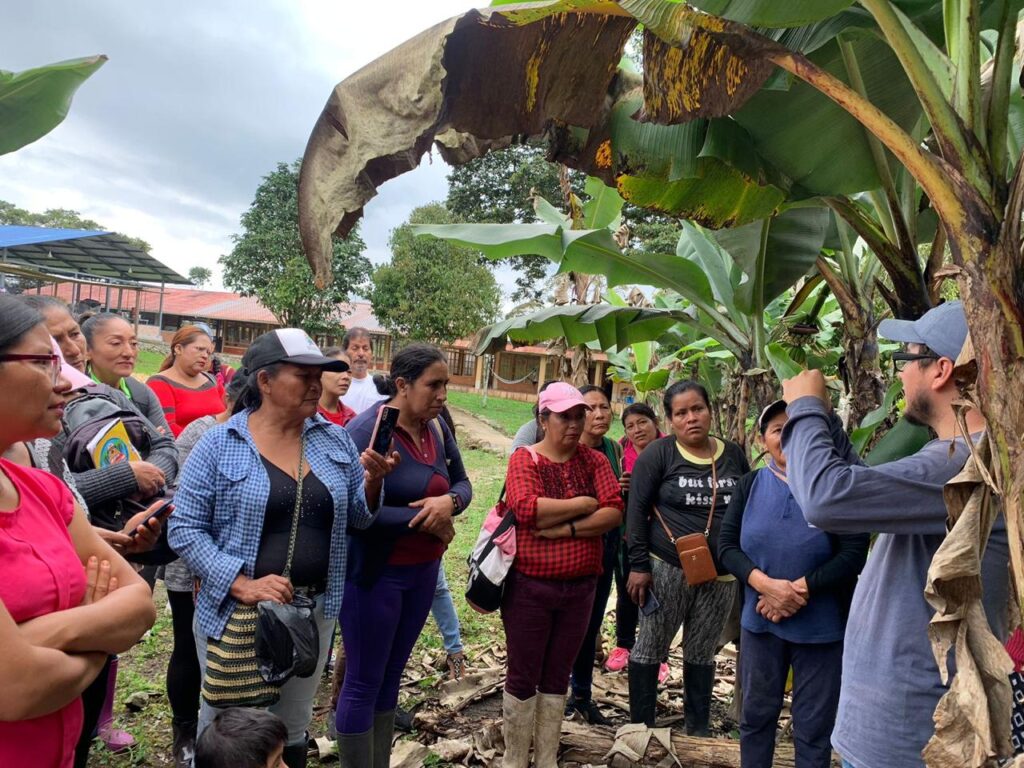
“Mujer Campesina“, a two-year project of social and health care in Ecuador, aimed at 1,505 indigenous women and their families, has started, with the aim of strengthening food security and supporting female entrepreneurship through sustainable agricultural practices and the enhancement of traditional knowledge.
The intervention concerns three communities in the canton of Morona-Santiago: Zuñac, San Isidro and 9 de Octubre, characterized by high levels of poverty, aggravated by the effects of the pandemic. Women, despite being central to food production and the conservation of native seeds, face strong gender inequalities and limited access to resources and markets.
The activities aim to ensure food security and nutritional variety for indigenous women farmers and their families, promoting agricultural sustainability with resilient crops and bioinputs, developing alternative productions with commercial potential, promoting the sale of high value-added products for stable incomes, and enhancing local food traditions as a source of innovation.