The effects of the riots in Nepal on the most vulnerable population and on the health projects of the Verona-based organization Doctors for Peace ODV
On September 8, news came unexpectedly of a sudden explosion of violence in Kathmandu, the capital of Nepal, which led to the death of over 20 protesters and over 400 injured.
The trigger for the riots was the Nepalese government’s decision on 4 September to ban the use of 26 social platforms — including Facebook, Instagram, WhatsApp, X, YouTube — justified by reasons of regulatory compliance. This decision was perceived by the population, especially the younger generation, as a threat to freedom of expression and information, and added to a widespread and long-rooted feeling of frustration with corruption and nepotism that characterize the decision-making bodies of the Himalayan country. The ongoing protests in Nepal echo similar movements that took place in Sri Lanka in 2022 and Bangladesh in 2024, highlighting the growing youth dissatisfaction in the region’s struggling economies. The current crisis does not seem to be limited to a single dispute: it represents a moment of profound rupture, with calls for systemic political reforms.
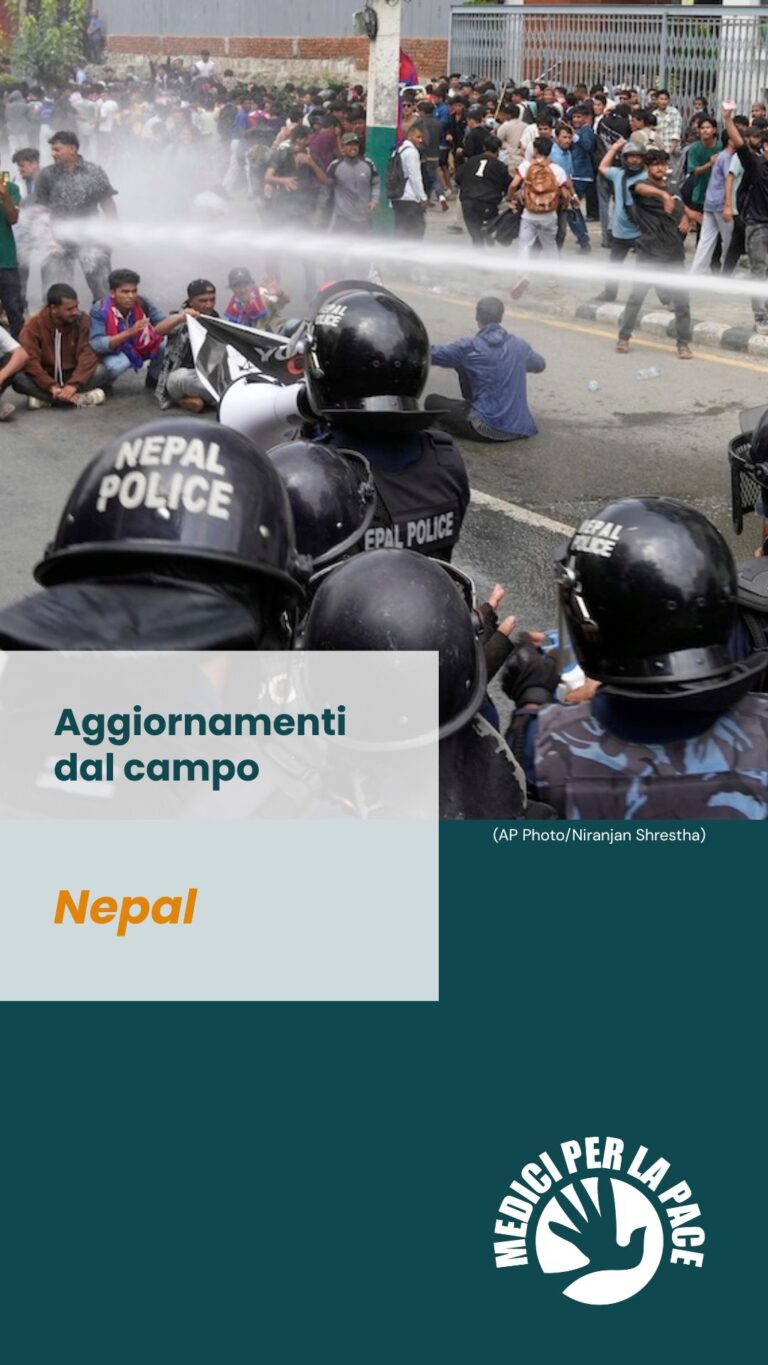
On September 9, the protests spread throughout the country: thousands of young people — many students, part of the so-called “Generation Z” — took part in the demonstrations that began in the early hours of the morning in the Maitighar Mandala area, in Kathmandu, heading towards the Parliament building, which was set on fire, and other government buildings. The police responded with tear gas, water cannons, rubber bullets and real ammunition. According to official sources, the toll is dramatic: at least 20 dead among the protesters (including 17 in Kathmandu alone), as well as hundreds of wounded that local hospitals are struggling to accommodate.
First Interior Minister Ramesh Lekhak and then Prime Minister Khadga Prasad Oli resigned, while the government announced the immediate lifting of the ban on social media, hoping to calm tension. Despite the about-face, protesters are continuing to demonstrate demanding structural reforms and a new political course.
The authorities have imposed a curfew in some areas of Kathmandu and in other cities such as Birgunj, Pokhara, Butwal, Itahari, Damak and Bhairahawa. At the same time, the mobilization of the army has been launched to restore order and control the hottest areas. Tensions are also having repercussions on transport: Kathmandu airport has been temporarily closed. Many countries, including Italy, are advising their compatriots against traveling to Nepal. The local population is currently barricaded in their homes, and schools are closed.
The Verona-based association Doctors for Peace ODV, which has been operating in Nepal for over a decade with health protection projects for the most vulnerable people, is in constant contact with its local contacts to monitor the evolution of the situation and its impact on active projects: in the days before the start of the crisis, the organization was carrying out free mobile dental, cardiological and gynecological camps both in Kathmandu and in the surrounding villages and in the Himalayan valleys. A team of local dentists was reached by the news of the violence while working in communities at over 5,000 meters above sea level, and is now waiting for updates on the possibility of returning to the capital. The activities of the projects are currently suspended to protect the safety of the beneficiaries, beneficiaries and staff. The on-site monitoring mission of the Italian operators, already organized for next October, is now also at risk.
In Nepal, medical care and prevention initiatives are lacking and difficult to access for the majority of the population, who live in a state of poverty and geographical isolation. Projects such as those carried out by Doctors for Peace serve to ensure that even the most vulnerable can benefit from health protection services. What has happened in recent days puts the continuation of these proximity initiatives at risk, to the disadvantage of those who already face significant obstacles in recognizing their fundamental rights. The contact person for Doctors for Peace projects on site describes a particularly critical situation: “Right now the curfew forces everyone to stay indoors: children do not go to school and adults cannot go to work. Most people here live on what they earn during the day: missing even a single day of work puts the survival of families at risk. We understand the reasons that are pushing young people to protest, but we are concerned about the effects of the protests on those who are most vulnerable”.
Doctors for Peace continues to monitor the evolution of the events, with the commitment to protect the safety of its beneficiaries, volunteers and collaborators, and to make it possible to continue the health activities in progress despite the difficulties and unpredictability of the social and political situation.