Nairobi Nutritional Project – Nutrition and health for women and children in Kenya
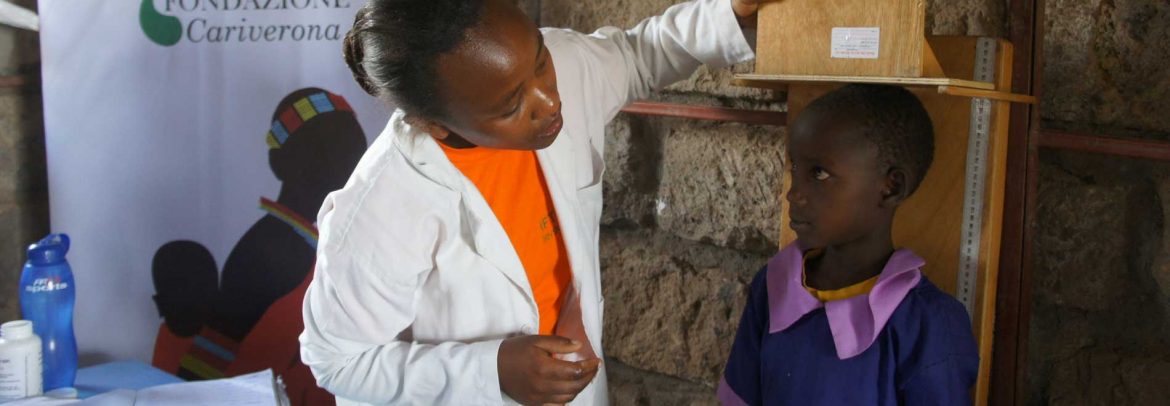
The project proposed a path that includes nutritional assistance, educational sessions on nutrition issues, and periodic treatments of intestinal parasitosis, aimed at women and children from informal settlements in Nairobi.
Project Map
The context
In Kenya, thanks to the support of the Cariverona Foundation and the collaboration with Amici del Mondo – World Friends, Doctors for Peace has activated an articulated social and health intervention to address the problem of malnutrition in the north-eastern slums of Nairobi.
In particular, the project aimed to improve the health conditions of the population, taking care of pregnant women and children. The project aimed to facilitate access to nutritional services and develop greater knowledge and more correct habits in the field of hygiene and food.
At the time of the project, informal settlements represent the most disadvantaged areas in terms of health protection and access to health services. Maternal and infant mortality rates are in fact higher (53% and 147% respectively) than the national average, which is already very high.
These data are also consequences of inadequate nutrition both quantitatively and qualitatively, which massively compromises the health of the pregnant woman and the unborn child. Diarrhoea (22%) and malnutrition (7%) are the causes of almost a third of deaths among children under 5 years of age. This occurs despite the fact that these diseases are easily preventable with suitable hygienic-sanitary and food practices.
Activities
The Nairobi Nutritional Project has enhanced the health services offered by World Friends in terms of human resources and medical equipment, has increased the periodic treatment of intestinal parasitosis and has carried out periodic monitoring of the nutritional status of students in the target schools; it has promoted hygienic-food education sessions for mothers and children, at the target health facilities and schools. Finally, great importance was given to the training of health personnel.
These are the activities of the project:
– Nursing, midwifery, paediatric and nutritional services (mobile clinic)
– Supply of medical supplies
– Local staff training
– Nutrition education and nutritional services
– Hygiene and health education